
We constantly speak with property owners who are surprised by the specific legal hurdles involved with removing a tenant.
When you research summary ejectment nc, you are simply looking at the formal North Carolina phrase for what most people know as an eviction. It functions as a fast-track legal process under NC General Statute Chapter 42, prioritizing speed over ordinary civil litigation.
Our property management team at Durham Elite Property Management knows from direct experience that a single procedural mistake can reset the clock and cost you weeks of rental income. Let’s review the actual timeline for magistrate court, the exact financial costs, and three common traps to avoid.
What “Summary Ejectment” Means in North Carolina
Understanding what is summary ejectment north carolina requires learning the basic legal vocabulary. This legal action falls under Articles 3 and 7 of Chapter 42, specifically targeting general residential and vacation rentals.
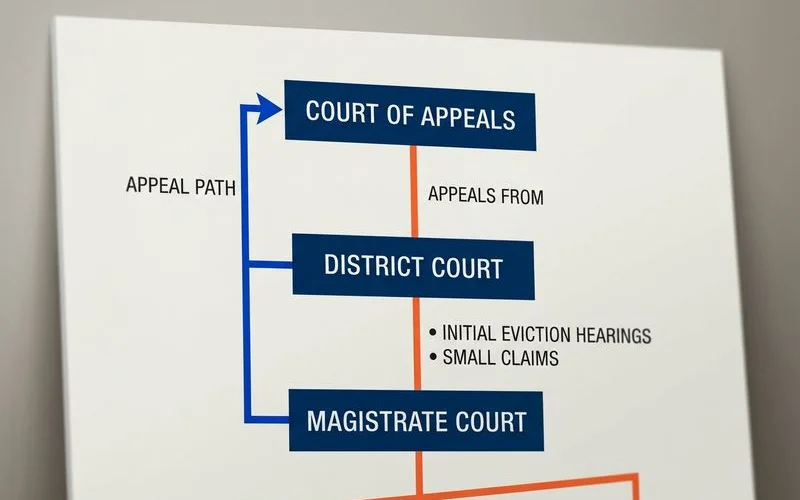
We always remind investors that a magistrate court eviction nc begins in the local small claims venue. This process is often called an nc small claims eviction by local investors.
The current limit for this venue is $10,000. If your tenant owes more than that amount, you must file in a higher district court.
Our standard procedure involves budgeting exactly $126 for the initial filing. This includes the $96 court filing fee and the $30 sheriff service fee per defendant.
Current Magistrate Court Fees (2026):- Filing Fee: $96 paid to the Clerk of Court
- Service Fee: $30 per defendant for Sheriff delivery
- Writ of Possession: $25 to enforce the lockout
A magistrate typically schedules the hearing within 7 to 14 days of filing, making it incredibly fast. We find this speed is a massive advantage compared to drawn-out civil lawsuits.
Grounds for Summary Ejectment
North Carolina law restricts evictions to four specific scenarios.
We closely monitor all notices because a single defective form will cause a magistrate to dismiss the case entirely. A dismissal forces you to restart the process and lose nearly a month of rental income. Let’s examine the primary reasons for filing.
1. Non-Payment of Rent
Non-payment is the most frequent reason property owners take action.
We mandate a strict waiting period because state law requires a 5-day grace period for late rent. You must serve a formal 10-day written notice to quit after this grace period expires.
A major insider tip involves standard lease agreements like the NC Realtors Form 410-T.
Our team has watched dozens of local investors delay their own cases by unnecessarily checking the 10-day notice box on the court complaint. If your lease already contains a specific forfeiture clause for non-payment, magistrates often do not require the separate 10-day statutory notice.
2. Breach of Lease Terms
Lease violations offer another clear path for removal.
We often file based on unauthorized pets, smoking damage, or unapproved occupants. You must provide a specific notice and allow a cure period if the lease requires it.
3. Holdover Tenants
Holdover tenancy occurs when a resident refuses to leave after the lease naturally expires.
We see this happen frequently when renewals are denied but the resident stays in possession. You do not need to prove fault, only that the agreed-upon time has ended.
4. Criminal Activity
Criminal behavior allows for an expedited filing if the actions threaten neighborhood safety.
Our managers move quickly on these specific NC provisions to protect other residents and the physical asset. Law enforcement documentation is highly recommended to prove these claims in front of a judge.
Magistrate Court vs District Court
Magistrate court serves as the entry point for almost all residential evictions. The atmosphere is less formal, and judges issue their rulings on the exact same day as the hearing.
We handle the vast majority of our cases successfully at this level. District court acts as the designated appellate level for these disputes.
Fact: A magistrate court judgment becomes final if the tenant does not file a formal appeal within 10 calendar days.
Tenants hold the right to appeal a magistrate’s judgment within 10 days of the ruling.
Our experience shows that only a small fraction of residents actually complete the appeal process. The main barrier is the strict financial requirement placed on the appealing party.
District court hearings require formal legal procedures, making attorney representation highly recommended. We strongly advise securing legal counsel if a case moves up to this higher venue.
Tenant Appeal Rights and Bond Requirements
North Carolina law forces an appealing tenant to post a cash bond. This bond equals the prorated rent owed at the exact time of the appeal.
We appreciate this rule because it filters out frivolous delay tactics. Residents who lack the funds to pay their rent simply cannot afford to file the appeal.
To maintain an active appeal, a resident must:- File the initial appeal within 10 days of the magistrate’s decision.
- Post a prorated cash bond to cover current owed rent.
- Make ongoing rent payments to the Clerk of Court as they become due.
The money sits with the Clerk of Court to protect the property owner from further financial loss.
Our protocol includes checking the clerk’s ledger monthly if an appeal does move forward. If the resident misses an ongoing rent bond payment during the 30 to 90 day wait, you can take immediate action.
A judge will typically strike the appeal and grant you possession right away. We always stay alert for missed bond payments to speed up the recovery.
What a Successful Judgment Delivers
Winning your case grants three specific legal remedies. Physical possession is the primary and most certain outcome.
We value the money judgment for back rent, but collecting those funds is entirely separate from regaining the property. A judge can also award compensation for proven physical damages.
Recent legislative changes under NC General Statute 42-46 clarify attorney fee recovery.
Our standard leases include a specific clause allowing us to claim these legal costs. You can legally recover up to 15% of the total amount owed if your lease contract explicitly permits it.
| Judgment Award Type | Immediate Result | Long-Term Action Required |
|---|---|---|
| Possession of Property | Right to file a Writ of Possession | None |
| Past Due Rent | Legal claim against the resident | Collection agency or bank levy |
| Attorney’s Fees | Added to total debt (up to 15%) | Collection agency or bank levy |
After the Judgment
A successful judgment gives you the right to purchase a writ of possession. This document legally authorizes the county sheriff to restore your physical control of the unit.
We typically see lockouts scheduled 5 to 7 days after the writ is issued. State law grants the displaced resident an additional 7 days to coordinate the retrieval of their personal belongings.
You must change the locks immediately after the sheriff clears the space.
Key Steps After Judgment:- Wait the 10-day appeal period.
- File the Writ of Possession at the clerk’s office.
- Schedule the physical lockout with the county sheriff.
- Secure the property by rekeying all exterior doors.
Our team has documented the entire timeline in detail if you want a closer look. For the full step-by-step timeline, see NC Eviction Process and Timeline for Landlords.
For the comparison of self-handling vs hiring help, see Self-Handling Eviction vs Hiring a Property Manager.
We also invite you to review how professional intervention helps by checking out our eviction services.
This guide is general information, not legal advice. Specific situations require consultation with a NC real estate attorney.
Reclaiming your property through a summary ejectment nc requires strict adherence to state deadlines and paperwork. A single error on a notice form can reset the entire timeline.
We highly recommend consulting with a licensed North Carolina real estate attorney for specific legal guidance. Stop losing rental income and start protecting your investment today.