The Six-Step NC Eviction Process
You know how fast a minor late-payment issue can escalate into a full-blown liability. North Carolina formally calls the eviction process a “summary ejectment” under General Statute Chapter 42, Article 3. The total timeline for an unappealed case in the Durham eviction process typically runs between three to six weeks.
From what we observe at Durham Elite Property Management, this timeline strictly depends on perfect paperwork. A simple documentation mistake on day one often leads to a magistrate dismissing your case. That minor error easily costs you an extra month of lost rent.
Let’s look at the actual data behind these six discrete steps and explore practical ways to respond at each stage.
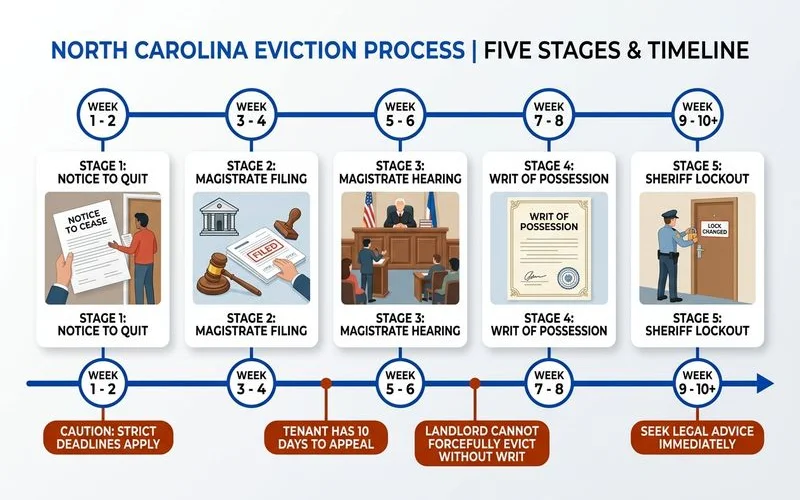
Step 1: Notice to Quit (Days 1-10)
Understanding how to evict a tenant in NC legally begins with serving a compliant 10-Day Notice to Pay or Quit for non-payment under NC GS 42-3. You must wait for the mandatory five-day grace period for rent to pass before issuing this notice.
All other lease violations or criminal activities require different notice periods.
Required Elements for a Valid Notice:
- Full tenant name and property address
- The exact amount of overdue rent calculated to the penny
- A clearly stated cure period
- Proper service method via personal delivery, door posting, or certified mail
- Landlord date and signature
We frequently catch property owners making a critical error by adding unauthorized fees into the total amount due. North Carolina law restricts late fees to $15 or 5% of the monthly rent, whichever is greater.
Including an arbitrary late fee on your notice gives tenant defense attorneys an easy target. The magistrate will dismiss a defective notice immediately. That simple mistake sets your timeline back by at least three weeks of lost rent.
Step 2: Summary Ejectment Filing (Day 11+)
You file the summary ejectment lawsuit with the magistrate court in the county where the rental property sits. In Durham County, this requires submitting specific administrative forms and paying the required court costs.
Once the ten-day notice expires without payment, you can immediately initiate the formal legal process.
Our team prepares Form AOC-CVM-201 for the main complaint and Form AOC-CVM-100 for the magistrate summons. These official state forms require precise details about the lease terms and the exact amount of money owed.
Current Filing Costs (Durham County):
- Small Claims Filing Fee: $96.00
- Sheriff’s Service Fee: $30.00 per defendant
- Total Initial Cost: $126.00 minimum for a single tenant
Filing online via the eCourts File & Serve system speeds up the intake process. The court typically schedules your magistrate hearing two to three weeks out from the filing date.
Step 3: Hearing Notice to Tenant
The court officially issues a hearing notice and directs the county sheriff to serve the tenant. This step gives the tenant a formal opportunity to respond and prepare a legal defense.
The Durham County Sheriff’s Office handles the delivery of these summons documents. North Carolina rules dictate that the papers must reach the tenant within five days of your initial complaint filing.
Approved Methods of Service:
- Personal delivery directly to the tenant
- Handing the documents to a person of suitable age at the residence
- Posting the notice clearly on the front door
We highly recommend monitoring the court portal to confirm the exact date of service. A confirmed service date proves to the magistrate that the tenant had adequate time to prepare.
Step 4: Magistrate Hearing (Day 25-35)
Both parties must present their case before a judge at the local magistrate court. The magistrate reviews the evidence and typically issues a judgment on the exact same day.
If your claim exceeds the North Carolina small claims limit of $10,000, you must file in District Court instead.
Our property managers always bring a complete evidence package to the courthouse. In court, timestamped documents and clear photos win over verbal arguments every single time. The tenant will present their defense, and you need hard proof to secure a victory.
Essential Hearing Evidence:
- A signed copy of the original lease
- A certified rent ledger showing all charges and payments
- A copy of the 10-day notice and proof of delivery
- Dated photographs documenting any physical property damage
A successful judgment delivers legal possession of the unit back to you. The judge may also award back rent, court costs, and attorney fees if your lease explicitly provides for them.
Step 5: Writ of Possession (Days 35-42)
The court issues a Writ of Possession when the magistrate grants a judgment in your favor. The tenant receives a strict ten-day window to either appeal the decision or vacate voluntarily.
Many tenants choose to leave the property at this stage to avoid a forced removal.
If the tenant remains after the ten-day appeal period expires, you must return to the clerk’s office on day eleven. You will request the official Writ of Possession form, known as AOC-CV-402.
Writ of Possession Fees:
- Clerk Issuance Fee: $25.00
- Sheriff Execution Fee: $30.00 per defendant
We consider this paperwork vital for securing the final sheriff lockout. The sheriff will post a final 48-hour warning on the property door before returning to perform the physical eviction.
Step 6: Sheriff Lockout (Days 42-49)
The sheriff schedules a physical lockout if the tenant fails to leave voluntarily after the writ is posted. The officer arrives to physically restore possession to the landlord.
Storage Fee Warning: If the tenant leaves personal belongings behind, the sheriff may order the items moved to a county storage warehouse. Landlords must advance the cost of delivery plus one month of storage fees before the sheriff will proceed.
You must coordinate with a locksmith to rekey the exterior doors immediately after the sheriff clears the unit.
We prepare for these potential storage expenses to ensure the officer executes the writ without delay. If you refuse to pay the advance storage costs, the sheriff will simply halt the lockout process.
Common Landlord Errors
Landlords frequently lose their cases due to simple procedural mistakes during the filing process. A single defective notice or a missed legal deadline forces you to restart the entire timeline from day one.
Frequent Stumbling Blocks:
- Defective Initial Notice: This represents the single most common DIY failure. Using the wrong wording, citing incorrect day counts, or demanding unauthorized fees guarantees a swift dismissal.
- Missing the Hearing: The magistrate will automatically dismiss the case if you fail to appear. You will have to pay the filing fees again and refile from scratch.
- Inadequate Evidence: Showing up without a rent ledger or a physical lease copy often results in a ruling for the tenant.
- Retaliatory Eviction Timing: North Carolina General Statute 42-37.1 protects tenants who report code violations. If you file for eviction within twelve months of a tenant complaining to a health agency, the tenant can claim a retaliatory defense.
- Self-Help Evictions: Changing locks, removing belongings, or shutting off utilities to force a tenant out creates massive legal liability. The only lawful path is waiting for the sheriff to execute the writ of possession.
Our team reviews every single notice three times to ensure absolute statutory compliance. You must eliminate these basic errors to keep your property profitable.
Timeline by County
Eviction timelines vary depending on the specific magistrate court schedules in your local area. Wake, Orange, and Alamance counties run on slightly different operational speeds than our primary focus area.
| County | Typical Speed | Key Factor |
|---|---|---|
| Durham County | 3 to 6 weeks | Clusters at the lower end but faces diversion program delays. |
| Alamance County | 4 to 7 weeks | Often runs slightly longer due to high court calendar density. |
Landlords in Durham should anticipate potential delays from the Durham Eviction Diversion Program. This initiative operates directly at the courthouse and connects tenants with free attorneys from Legal Aid of North Carolina.
We always advise owners to assume the tenant will secure legal representation. When a tenant has a lawyer checking your paperwork for flaws, absolute precision becomes your best defense.
What an Appeal Adds
A formal appeal to the district court significantly extends the standard North Carolina eviction timeline. Tenants have ten days following the magistrate’s judgment to file this appeal.
The appeal process adds an additional 30 to 90 days to your waiting period.
Most North Carolina evictions resolve at the magistrate level without an appeal because the financial barrier is meaningful.
Tenant Appeal Requirements: To stay in the property during the appeal, the tenant must pay a $150 court fee and post a stay of execution bond equal to the past due rent.
We encourage you to review these resources for your next steps:
- For the formal definition and statutory background, see Summary Ejectment in NC: What Landlords Need to Know.
- For a complete comparison versus hiring professional help, check out Self-Handling Eviction vs Hiring a Property Manager.
- To get immediate assistance with your property, explore our operational eviction services today.
This guide provides general information, not legal advice. Specific situations require consultation with a North Carolina real estate attorney.