
We see the same frustration from investors trying to set a rental property maintenance budget north carolina markets will actually respect.
Costs for materials and labor shifted again in early 2026. This reality forces owners to look beyond national averages and plan for local conditions.
Our team at Durham Elite Property Management reviews hundreds of ledgers a year to separate actual expenses from optimistic guesses. Let’s look at the data to see what it is actually telling us, and explore practical ways to respond to local challenges.
Three Industry Budgeting Rules
Property managers cluster rental maintenance budgets around three industry rules, with each offering a unique planning purpose. We use these distinct formulas to guide different stages of investment strategy.
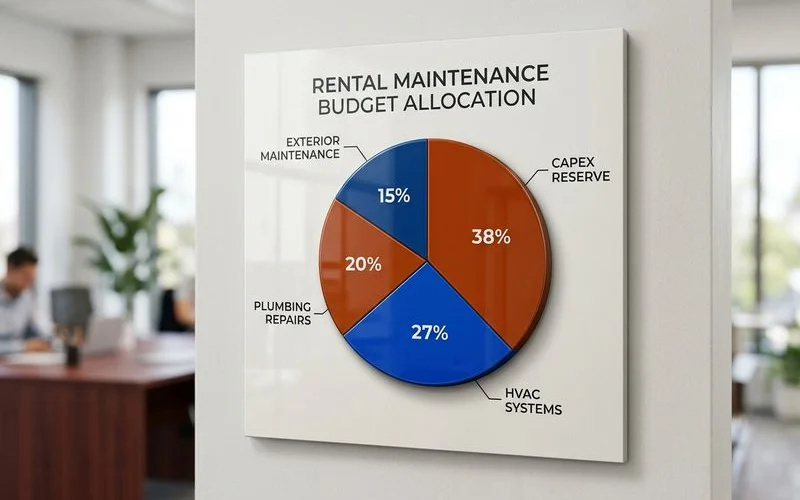
These three frameworks provide a starting point for your financial planning. You will adjust them later based on specific property conditions.
Rule 1: The 1% Rule
This rule directs owners to budget one percent of the total property value annually for maintenance. A property valued at $420,000 requires a $4,200 yearly reserve under this standard.
Our maintenance coordinators apply this 1 percent rule rental maintenance formula for rapid initial estimates. The math scales perfectly across different property values.
- $200K rental needs a $2,000 yearly reserve
- $300K rental needs a $3,000 yearly reserve
- $500K rental needs a $5,000 yearly reserve
Raleigh typical home values sit around $420,000 in 2026, making a $4,200 reserve the local standard. We see humidity and a long cooling season push the actual number 10 to 15 percent above that one percent baseline.
Older properties built before 1990 trend even higher due to aging plumbing and electrical systems. Investors should pad this budget slightly to absorb costly material spikes.
Rule 2: The 50% Rule
This guideline allocates half of all collected rent to total operating expenses, excluding the mortgage. It serves as a rapid evaluation tool for prospective acquisitions rather than a strict month-to-month budgeting metric.
Our analysts use this to capture the full picture of taxes, insurance, management, vacancy, maintenance, and capex. The actual maintenance reserve is just one slice of that total pie.
Consider a typical property generating $2,000 a month in revenue. You will calculate the annual impact using these specific steps:
- Total annual rent collected equals $24,000
- 50 percent rule allocates $12,000 to total operating expenses
- The maintenance portion typically consumes $1,500 to $3,000 of that expense pool
Average rent in Raleigh hit approximately $1,600 in early 2026, adjusting the baseline expense pool slightly for local owners. We find that exact property conditions will dictate whether your specific maintenance slice leans toward the high or low end of that range.
A well-maintained property consistently stays near the $1,500 minimum.
Rule 3: $1 Per Square Foot Annually
This method sets a baseline budget of one dollar for every square foot of the rental space. A standard 1,500 square foot rental requires a $1,500 annual reserve using this calculation.
Our portfolio managers prefer this rule because it scales naturally with property size. Mixing small condos and large single-family homes becomes much easier when you attach costs directly to the floor plan.
North Carolina construction costs run about 12 percent below the national average in 2026, which helps keep this ratio accurate. You will still need to adjust the baseline based on the construction year.
- Newer construction often comes in below $1.00 per square foot.
- Standard properties hold steady right at the $1.00 per square foot mark.
- Older properties usually trend between $1.50 and $2.00 per square foot.
We consistently use this formula to build out long-term projections for diverse property mixes. Accurate square footage measurements are critical for this approach.
NC-Specific Maintenance Factors
Local weather patterns significantly alter baseline maintenance costs across the state. Our climate forces owners to budget heavily for moisture control and extended air conditioning usage.
You must adapt national formulas to survive regional environmental stress. The following factors consistently drive up local property expenses.
Humidity and Mold Mitigation
Triangle humidity drives more frequent paint cycles, exterior caulking maintenance, and HVAC condensate line attention. We schedule active monitoring for basements and crawlspaces to combat ideal mold growth conditions.
Moisture buildup ruins drywall and flooring rapidly if ignored. Quarterly inspections are a mandatory part of the prevention strategy.
Long Cooling Seasons
North Carolina summers demand five to seven months of heavy HVAC load. This extended run time requires higher frequency filter changes and regular refrigerant checks compared to northern markets.
Our technicians recommend installing high-quality pleated filters to protect blower motors during peak heat. You must clear condensate lines frequently to prevent costly water backups.
Hurricane and Storm Exposure
Late summer and early fall storms add 10 to 20 percent to your budget in some years. Strong winds cause gutter damage, rip away exterior fixtures, and require emergency tree removal.
We strongly advise allocating funds specifically for structural assessments after major weather events. Preventative tree trimming reduces the risk of massive structural damage.
HVAC Age and Regional Wear
Air conditioning systems run incredibly hard in our region. You should plan for a full replacement at 12 to 15 years even with excellent care.
Poor maintenance pushes that timeline closer to the 10-year mark. We classify the eventual replacement as a separate capex item entirely.
Planning ahead prevents financial strain when the system finally fails.
Operating vs Capex Distinction
Operating maintenance covers routine annual repairs, while capital expenditures fund major system replacements. Separating these two budgets helps control your overall rental property maintenance cost over the long term.
Our accounting practices isolate these two categories to maintain clear financial visibility. You need to know exactly which bucket pays for a specific vendor invoice.
- Operating maintenance: This annual reserve covers filter changes, plumbing repairs, paint touch-ups, gutter cleaning, exterior caulk, smoke detector batteries, lawn care, and pest control.
- Capital expenditures (Capex): This separate fund handles major systems planned by age, including roof replacements, new HVAC units, water heaters, and full exterior paint jobs.
Recent market data from Angi in 2026 shows local system replacements demand careful long-term saving. We track these typical lifespans and current Triangle region replacement costs to keep reserves fully funded.
| System | Typical Lifespan | Replacement Cost (Triangle 2026) |
|---|---|---|
| Asphalt roof | 20-30 years | $8,000 - $15,000 |
| HVAC system | 12-15 years | $7,500 - $12,500 |
| Water heater (tank) | 8-12 years | $1,200 - $2,000 |
| Major appliances (each) | 10-15 years | $500 - $1,500 |
A standard 50-gallon electric water heater pushes the higher end of that range when adding new code-required expansion tanks. You avoid emergency loans by funding these known costs years in advance.
Line-Item Categories DIY Landlords Forget
Independent owners frequently underfund hidden seasonal tasks and specific local compliance updates. Missing these routine expenses causes budgets to run dry before the year ends.
Our audit teams constantly find these specific items missing from homemade spreadsheets. You must integrate these costs into your primary operating reserve.
- Smoke detector compliance: North Carolina law requires tamper-resistant 10-year lithium battery smoke alarms when replacing old units.
- Gutter cleaning: Plan for $200 to $400 a year to prevent foundation erosion and roof rot.
- HVAC filter changes: Budget $120 to $250 a year if professionally serviced, which protects the expensive blower motor.
- Exterior maintenance: Factor in regular caulk and paint touch-ups to seal the building envelope against humidity.
- Furnace tune-ups: Annual heating inspections are highly recommended locally to prevent winter emergencies.
- Arborist services: Tree maintenance significantly reduces hurricane season structural risk.
We see owners save thousands in structural repairs simply by funding that $300 gutter cleaning line item. Proactive funding beats reactive scrambling every single time.
How Quarterly Inspections Cut Surprises
Consistent property evaluations detect minor leaks and wear before they escalate into massive repair bills. Fixing a $300 issue today actively prevents a $3,000 emergency replacement in eighteen months.
Our field inspectors catch failing components months before they inconvenience a tenant. The compounding cost math proves that ignoring small problems guarantees expensive capex events later.
Owners running quarterly inspections through professional management consistently see fewer surprise capex events. You protect your profit margins by adopting a strict preventative schedule that targets three critical areas:
- Catching minor plumbing drips before they rot out subflooring
- Ensuring tenants are actually changing HVAC filters to save blower motors
- Spotting early signs of roof or gutter leaks before drywall damage occurs
We combine scheduled oversight with rapid response to protect your investment completely. Reviewing exactly What’s Included in a Quarterly Rental Property Inspection? clarifies the scope that drives this prevention.
Setting up a streamlined dispatch flow is equally critical, which you can learn about in our guide on How 24/7 Emergency Maintenance Works. For a clear look at the operational picture, explore our comprehensive maintenance and inspections service.
Conclusion
Setting a realistic nc rental maintenance reserve requires accurate data and consistent execution. You cannot rely on outdated national averages to protect a local asset.
Our team is ready to help you implement these strategies. Contact Durham Elite Property Management today to refine your rental property maintenance budget and schedule your next property inspection.